
Beyond Greetings: India’s Religious Calendar and B2B Demand
India’s religious calendar is not merely a list of holy days. It is a map of emotion, liquidity, movement, food habits, gifting, procurement, credit, production and aspiration. For B2C marketers, it tells them when consumers may buy. For B2B marketers, it tells them when businesses must prepare.
Mohammad Danish
6/20/20264 min read
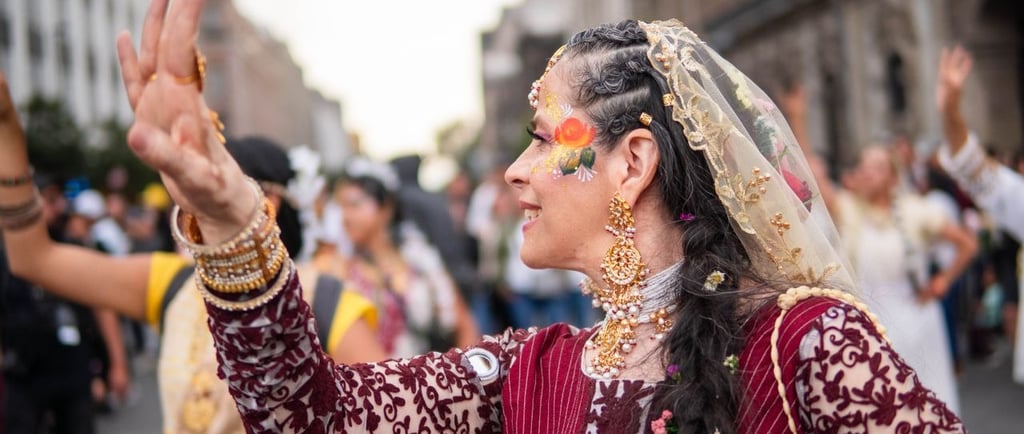

Most calendars tell us what day it is. India’s religious calendar tells businesses what demand might look like.
This is not a poetic observation. It is a strategic truth hiding in plain sight. Across India, festivals, fasting periods, auspicious buying days, harvest celebrations and religious observances quietly shape what people eat, buy, postpone, save, gift, finance and upgrade. For millions of households, these choices are guided by faith, tradition and community behaviour. For businesses, they become recurring demand patterns that repeat every year with surprising discipline.
And whenever spending patterns become predictable, marketing should stop behaving like decoration and start behaving like intelligence.
For too long, festivals have been treated as consumer marketing opportunities: Diwali offers, Eid discounts, Navratri menus, Onam campaigns, Christmas bundles, Dhanteras jewellery ads. That is the obvious layer. The deeper layer is B2B. Because before a consumer buys, a business prepares. Before festive demand appears at the retail counter, it has already travelled through factories, distributors, warehouses, logistics networks, payment systems, call centres, SaaS platforms, inventory tools, and credit lines.
That is where B2B marketers should be paying attention.
India’s festival economy is not small seasonal noise. It is a large, recurring economic cycle. Redseer has described festivals in India as predictable economic cycles that influence consumption, liquidity, employment and marketing intensity across sectors.¹ During the 2025 festive season, online retail alone was expected to cross ₹1.15 lakh crore in GMV, growing 20–25% year-on-year.² CAIT reported Diwali 2025 trade of ₹5.40 lakh crore in goods and ₹65,000 crore in services, showing how powerful one cultural season can be for the broader economy.³
The B2B implication is clear: if your customer’s customer is preparing for a festival, your customer is already under pressure.
Take warehouse automation. A retailer expecting Diwali demand cannot start preparing in October. Its warehouse capacity, sorting efficiency, packing lines, labour planning, barcode systems and last-mile coordination must be ready months earlier. A smart warehouse automation company should not run a generic “improve productivity” campaign. It should run a readiness campaign: “Can your fulfilment network handle festive demand without adding chaos?” That message is not festive gimmickry. It is business relevance.
The same logic applies to ERP, supply chain software and demand planning platforms. A manufacturer supplying appliances, packaged food, textiles, automotive components or electronics must forecast raw material needs, dealer orders, production schedules and distributor inventory before the festival spike begins. A B2B software company selling planning tools should connect its proposition to this operational reality. The message should not merely be “AI-powered forecasting.” It should be “forecast religious-calendar-led demand before your competitors overstock or undersupply.”
In financial services, the pattern is equally strong. Before festive consumption rises, businesses need working capital. Dealers need inventory finance. SMEs need short-term credit. Payment companies see transaction growth. Banks and fintechs can build campaigns around cash-flow preparedness rather than generic loan promotion. A lender that understands festival-linked inventory cycles can speak far more intelligently to a retailer, distributor or manufacturer than one simply offering “easy business loans.”
Even gold tells a B2B story. India’s gold demand rose 10% year-on-year to 151 tonnes in Q1 2026, while value demand nearly doubled to a Q1 record of ₹2,275 billion, according to the World Gold Council.⁴ Gold buying is influenced by weddings, festivals and auspicious dates. Behind that consumer purchase are refiners, jewellers, logistics providers, insurers, payment companies, compliance platforms, inventory systems and security services. The visible transaction is B2C. The invisible machinery is B2B.
This is why B2B marketers in India need cultural intelligence, not just demographic segmentation. A quarterly campaign calendar is not enough. A religious and regional calendar should sit beside the fiscal calendar, product roadmap and sales pipeline. Diwali does not affect Tamil Nadu, Bengal, Gujarat, Delhi and Kerala in exactly the same way. Onam is commercially significant in Kerala. Durga Puja reshapes consumption in Bengal. Pongal and Makar Sankranti influence southern and agrarian markets. Ramadan changes food, retail, distribution and working-hour rhythms across many regions. Navratri changes food consumption and retail behaviour. These are not soft cultural notes. They are demand signals.
For B2B marketing teams, the practical opportunity is to build campaigns around consequences, not celebrations.
Do not say, “Happy Diwali from our company.” Say, “Three ways manufacturers can avoid festive-season fulfilment delays.” Do not say, “Ramadan Mubarak from our brand.” Say, “How food distributors can prepare for altered demand cycles during Ramadan.” Do not say, “Celebrate Navratri with our solution.” Say, “How restaurants and food brands can use fasting-period demand shifts to plan inventory better.”
This is the difference between greeting-card marketing and growth marketing.
The most mature B2B organisations can go even further. They can enrich CRM data with festival calendars. They can analyse past lead velocity before major buying seasons. They can create regional nurture tracks based on local business cycles. They can time ABM campaigns around procurement planning windows. They can publish industry benchmarks before demand peaks. They can help sales teams open conversations not with product brochures, but with commercially useful insights.
For example, a cloud infrastructure provider targeting e-commerce companies can create a “Festive Load Readiness Index.” A cybersecurity company can warn retailers about fraud and phishing spikes during high-transaction periods. A logistics SaaS firm can publish a “Diwali Dispatch Preparedness Checklist.” A marketing automation company can help brands segment customers by festival-led buying intent. An industrial automation company can show how production bottlenecks before peak season lead to lost revenue later.
None of this requires exploiting faith. It requires respecting behaviour.
India’s religious calendar is not merely a list of holy days. It is a map of emotion, liquidity, movement, food habits, gifting, procurement, credit, production and aspiration. For B2C marketers, it tells them when consumers may buy. For B2B marketers, it tells them when businesses must prepare.
That is the strategic shift.
Because in India, demand does not move only by quarter. It moves by culture. It moves by belief. It moves by family decisions, community rhythms, auspicious timings and inherited habits.
And the businesses that understand this will not merely advertise during festivals. They will build pipelines before festivals, enable customers during festivals and measure outcomes after festivals.
Most calendars tell us what day it is.
India’s religious calendar tells marketers what demand is becoming.
Research references:
Redseer’s 2026 analysis describes India’s festivals as predictable economic cycles influencing consumption, liquidity, employment and marketing intensity. Redseer’s 2025 festive forecast projected ₹1.15 lakh crore-plus e-commerce GMV with 20–25% year-on-year growth.
CAIT reported Diwali 2025 trade of ₹5.40 lakh crore in goods and ₹65,000 crore in services.
The World Gold Council reported that Indian gold demand rose 10% year-on-year to 151 tonnes in Q1 2026, with value demand at ₹2,275 billion.
Journey well taken
Sharing life insights on marketing and motorcycling adventures.
Connect
© 2026. All rights reserved.