
Every Chai doesn't have to be a leadership lesson
Every Chai, Home Delivery, Cab Ride, Roadside hawker or even a child with a broken shoe mustn't be manufactured into a leadership story for LinkedIn. There's a story fatigue. Agree?
Mohammad Danish
6/19/20263 min read
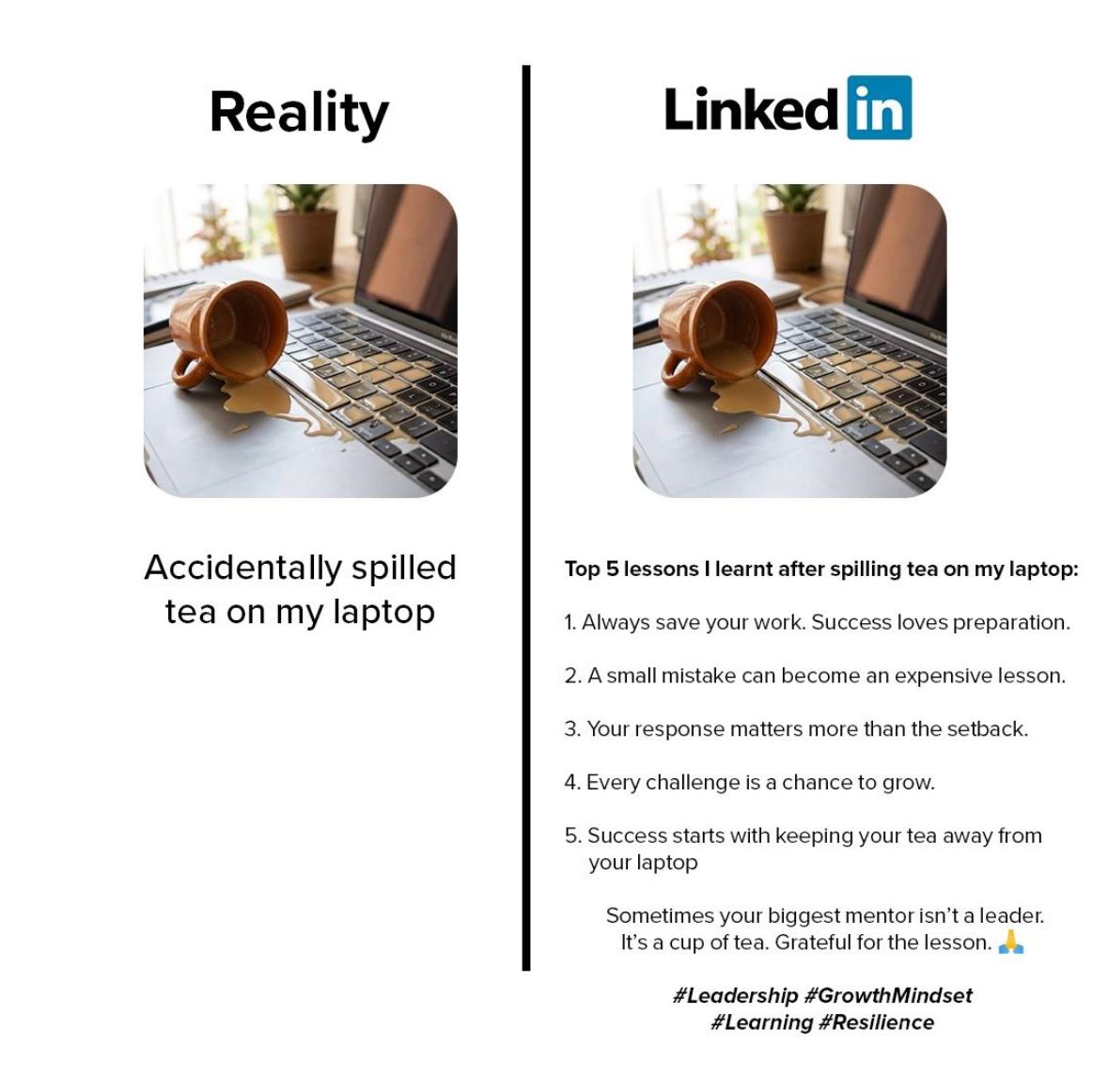
A few years ago, LinkedIn felt different.
People shared insights from their work, discussed industry trends, talked about challenges they were facing, and occasionally reflected on experiences that shaped their careers. The content wasn't always polished, but it felt authentic.
Today, scrolling through LinkedIn often feels like walking through a strange alternate universe where every conversation is life-changing and every random encounter delivers a profound management lesson.
A child selling pens at a traffic signal teaches leadership.
A cab driver reveals the secret to customer success.
A security guard explains resilience.
A barista uncovers the essence of innovation.
An airport janitor redefines strategy.
And somehow, all these interactions conveniently conclude with five lessons about leadership, culture, growth mindset, personal branding, emotional intelligence, or entrepreneurship.
One cannot help but wonder: Did this really happen?
The problem isn't storytelling itself. Humans have always learned through stories. Great leaders, teachers, writers, and speakers throughout history have used stories to communicate complex ideas. Stories make information memorable and relatable.
The problem begins when storytelling becomes performative.
Many professionals today feel an unspoken pressure to maintain visibility online. Algorithms reward frequency. Personal branding experts advocate consistency. Engagement metrics become a measure of relevance. Slowly, the platform starts encouraging people to search for content opportunities rather than genuine experiences.
The result is predictable.
Ordinary incidents are exaggerated.
Conversations are reconstructed.
Details are embellished.
Emotions are amplified.
And every experience must somehow end with a universal lesson worthy of a keynote speech.
What gets lost in this process is authenticity.
Ironically, the more people try to appear insightful, the less believable they often become. Audiences may not always be able to prove a story is fabricated, but they can usually sense when something feels engineered rather than experienced.
Professional credibility is a fragile thing. It is built over years through expertise, consistency, honesty, and demonstrated results. Yet many people unknowingly trade that credibility for temporary engagement by publishing stories that sound suspiciously perfect.
Real life is rarely that neat.
Most meaningful lessons don't arrive in the form of cinematic encounters with strangers. They emerge from months of hard work, failed projects, difficult conversations, missed targets, poor decisions, uncomfortable feedback, and gradual personal growth.
The best leadership lessons often come from situations that are messy, confusing, and unresolved.
They don't fit neatly into a carousel post.
They don't always produce a catchy headline.
They don't always generate thousands of likes.
But they are real.
There is another consequence of this trend that receives far less attention. It creates unrealistic expectations for everyone else.
Young professionals begin believing they need a profound revelation every week to have something worth sharing. Managers feel compelled to package ordinary experiences into inspirational narratives. Coaches and consultants start sounding increasingly similar because they are all drawing from the same formula.
A dramatic hook.
A surprising encounter.
An emotional moment.
A list of lessons.
A call to action.
After seeing this structure hundreds of times, the content starts blending together. Individual voices disappear and templates take over.
The irony is that audiences are often searching for the exact opposite.
Many professionals are tired of perfection. They are tired of manufactured inspiration. They are tired of carefully crafted authenticity.
What resonates today is honesty.
A marketer explaining why a campaign failed.
A founder discussing a difficult business decision.
A leader admitting they got something wrong.
A salesperson sharing lessons from a lost opportunity.
An employee describing a genuine challenge at work.
These stories may never go viral, but they build something far more valuable: trust.
LinkedIn does not need less storytelling.
It needs more truthful storytelling.
Not every observation needs to become a leadership lesson.
Not every interaction needs to become a motivational speech.
Not every professional needs to become a philosopher.
Sometimes sharing a genuine experience, a practical insight, a hard-earned lesson, or even an unanswered question contributes more to the professional community than the most perfectly crafted inspirational narrative.
Perhaps the next evolution of professional content is not becoming more polished, more emotional, or more viral.
Perhaps it is becoming more honest.
Because in a platform increasingly crowded with manufactured wisdom, authenticity itself has become the rarest form of thought leadership.
Journey well taken
Sharing life insights on marketing and motorcycling adventures.
Connect
© 2026. All rights reserved.